
⚡ Join us for the Silver Jubilee episode of our LinkedIn talk show. ⚡
Book a Demo
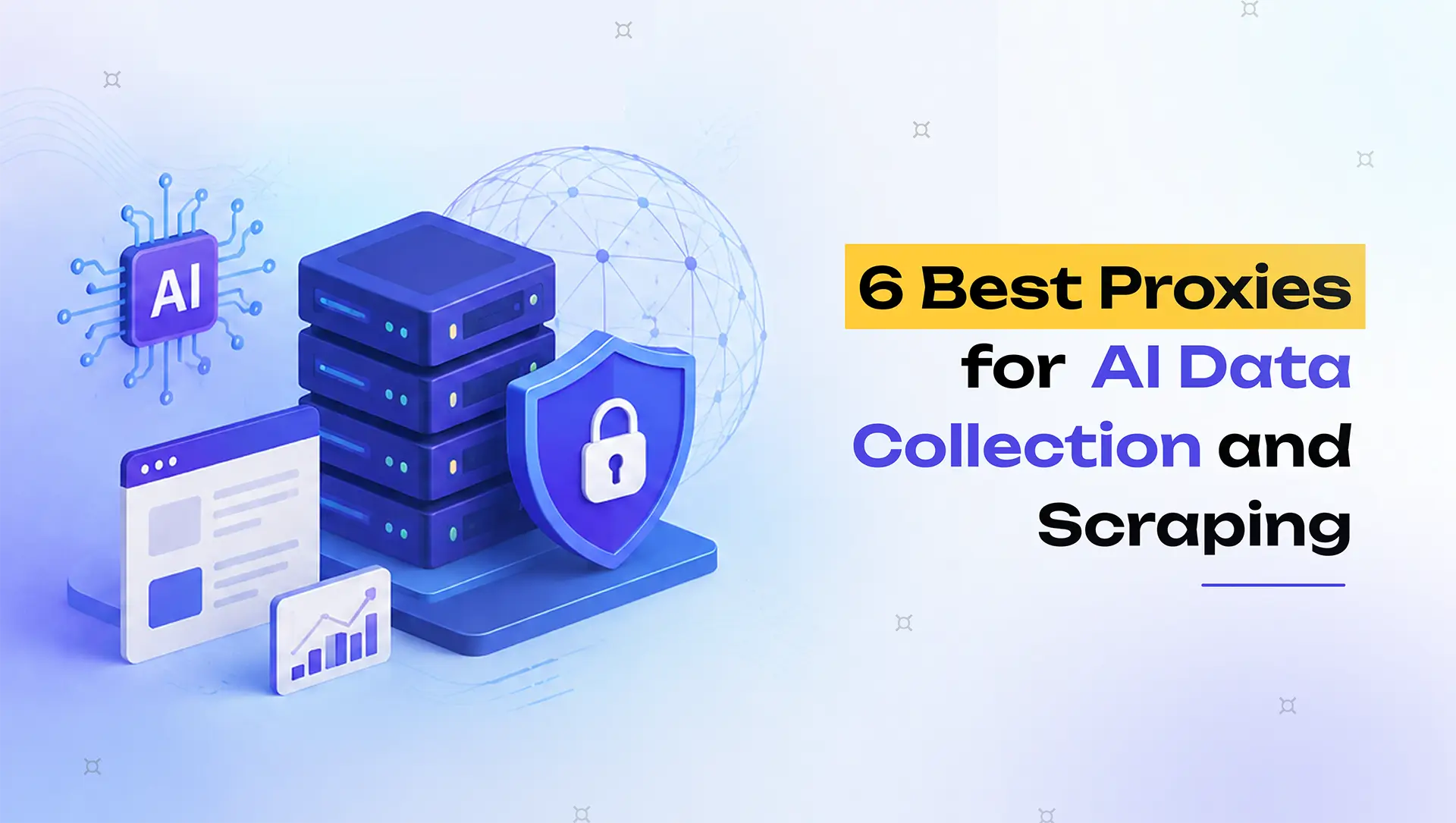
AI data collection now depends on infrastructure that can support stable scraping, controlled routing, and recurring automation across multiple targets. AI systems continuously collect product data, search results, reviews, social media signals, and public web content, which makes request distribution and session stability critical for long-running workflows.
According to IBM, 45% of organizations name data accuracy or bias as a major AI adoption challenge, while 42% report insufficient proprietary data for customizing generative AI models. These barriers show why AI teams need a reliable data collection infrastructure for scraping, RAG pipelines, and automated retrieval workflows. Proxy quality directly affects access stability, geo-targeting accuracy, session continuity, and large-scale request distribution.
Proxies for AI data collection route scraping traffic through external IP addresses so AI systems can access public web data across different locations, sessions, and workflows without concentrating requests on one endpoint.
They help distribute automated requests during recurring collection tasks for search results, reviews, prices, product listings, marketplace data, and regional content. AI teams use them for LLM training datasets, RAG data refreshes, geo-specific SERP checks, and country-level marketplace monitoring.
AI data teams need proxies because recurring scraping creates large request volumes across many targets, locations, and automation workflows. Strong proxy infrastructure improves stability, lowers request concentration, and keeps collection pipelines running more predictably.
Different proxy types support different AI scraping conditions depending on request volume, workflow length, target sensitivity, and session requirements. Most AI teams combine several proxy types when one workflow needs scale, another needs trust, and another needs speed.
Residential Proxies
Residential proxies use real home IPs and fit most AI scraping, RAG retrieval, SERP collection, and market monitoring workflows. Their residential identity improves trust and lowers detection risk during recurring data collection. Live Proxies describes rotating residential proxies as real home IPs that can change through ISP updates, router restarts, or peer replacement.
Mobile Proxies
Mobile proxies route traffic through carrier networks like 3G, 4G, and 5G. They fit stricter anti-bot environments, mobile app scraping, social media automation, and mobile-sensitive targets where carrier IPs appear more natural. Live Proxies notes that mobile proxies use telecom carrier IPs and can rotate automatically at set intervals or on request.
Datacenter Proxies
Datacenter proxies focus on speed, lower cost, and predictable infrastructure. They fit high-volume scraping tasks where throughput matters more than residential IP reputation. These proxies work best for less sensitive targets, bulk crawling, internal testing, and workflows that need fast request handling.
ISP Proxies
ISP proxies combine datacenter infrastructure with ISP-routed IPs. They support workflows that need stronger identity stability, together with lower latency and faster request handling. This makes them useful for repeated access, account checks, and scraping tasks where frequent IP changes may break continuity.
Rotating Proxies
Rotating proxies continuously refresh IP addresses during scraping workflows. This helps distribute requests across larger IP pools and reduces repetitive traffic patterns. They are useful for AI data collection systems that run recurring queries, scrape many URLs, or refresh datasets across many sources.
The strongest AI scraping proxies combine routing quality, stable sessions, flexible rotation, and scalable automation support. A large IP pool helps, but scraping reliability also depends on how well the provider controls sessions, targeting, traffic, and integration.
The best private proxies are most useful when AI scraping workflows need stronger route separation, cleaner session control, and predictable access across repeated targets. They are especially useful for recurring collection systems that revisit the same SERPs, marketplaces, review platforms, or regional datasets.
Lower IP Overlap
Dedicated routing helps separate scraping tasks across repeated targets and workflows. This reduces route conflicts when several AI pipelines collect data at the same time, revisit the same sources regularly, or run parallel collection tasks across similar platforms and recurring scraping environments.
Cleaner Sessions
Stable private sessions support AI agents, RAG retrieval systems, and longer automation tasks. They help multi-step workflows keep continuity when systems need repeated access to one source, account flow, or regional dataset without resetting the route too often during extended automation cycles.
Better Geo-Targeting
Private residential and mobile IPs improve localized scraping accuracy across countries, cities, and market segments. This helps AI systems compare SERPs, prices, ads, reviews, and regional public data with fewer location mismatches or inconsistent local results across target markets.
Higher Workflow Stability
Controlled routing reduces interruptions during scheduled scraping, dataset refreshes, and long-running automation workflows. This helps AI pipelines run more consistently when teams collect data at scale, monitor changes, or refresh datasets on a recurring schedule across multiple sources.
AI scraping proxies differ by proxy type, session control, geo-targeting depth, API support, and entry pricing. The table below keeps the comparison focused on criteria that matter most for recurring AI data collection and scraping workflows.
AI scraping workflows require different proxy setups depending on automation scale, target sensitivity, session behavior, and geo-targeting requirements. The providers below cover enterprise scraping, budget testing, geo-sensitive collection, sticky sessions, and AI-connected automation.
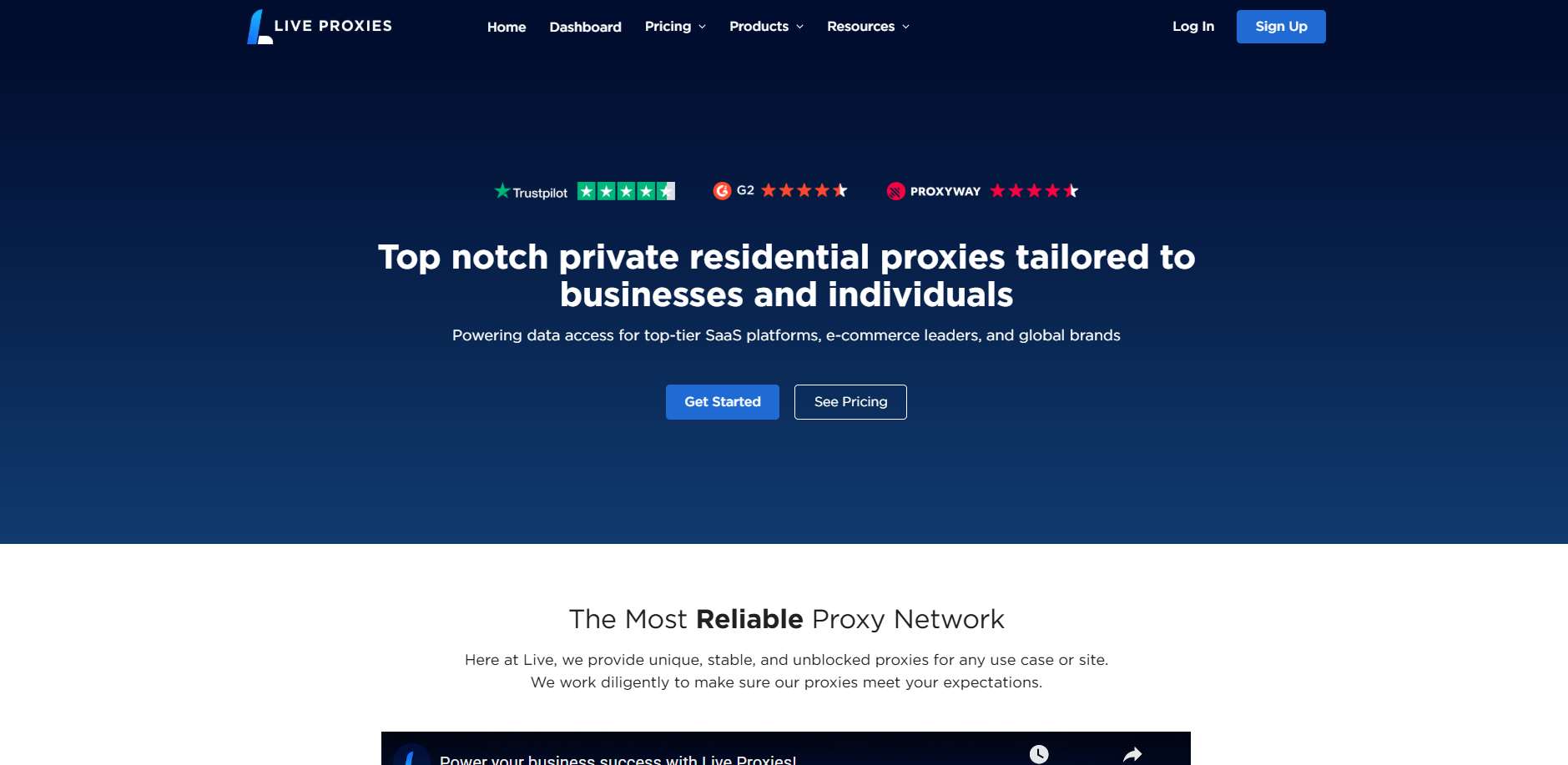
Live Proxies is one of the strongest options for AI scraping workflows that need unlimited rotating residential proxies, rotating mobile proxies, sticky sessions up to 24h, private IP allocation, unlimited threads, SOCKS5 and HTTP support, and 55-country coverage. Its residential routing uses real home IPs, while its mobile routing uses carrier-based IPs from 3G, 4G, and 5G networks. This setup fits AI data collection workflows that require scalable access, stable session behavior, geo-specific routing, and cleaner request distribution for recurring automation.
Key Features
Best Workflow Fit
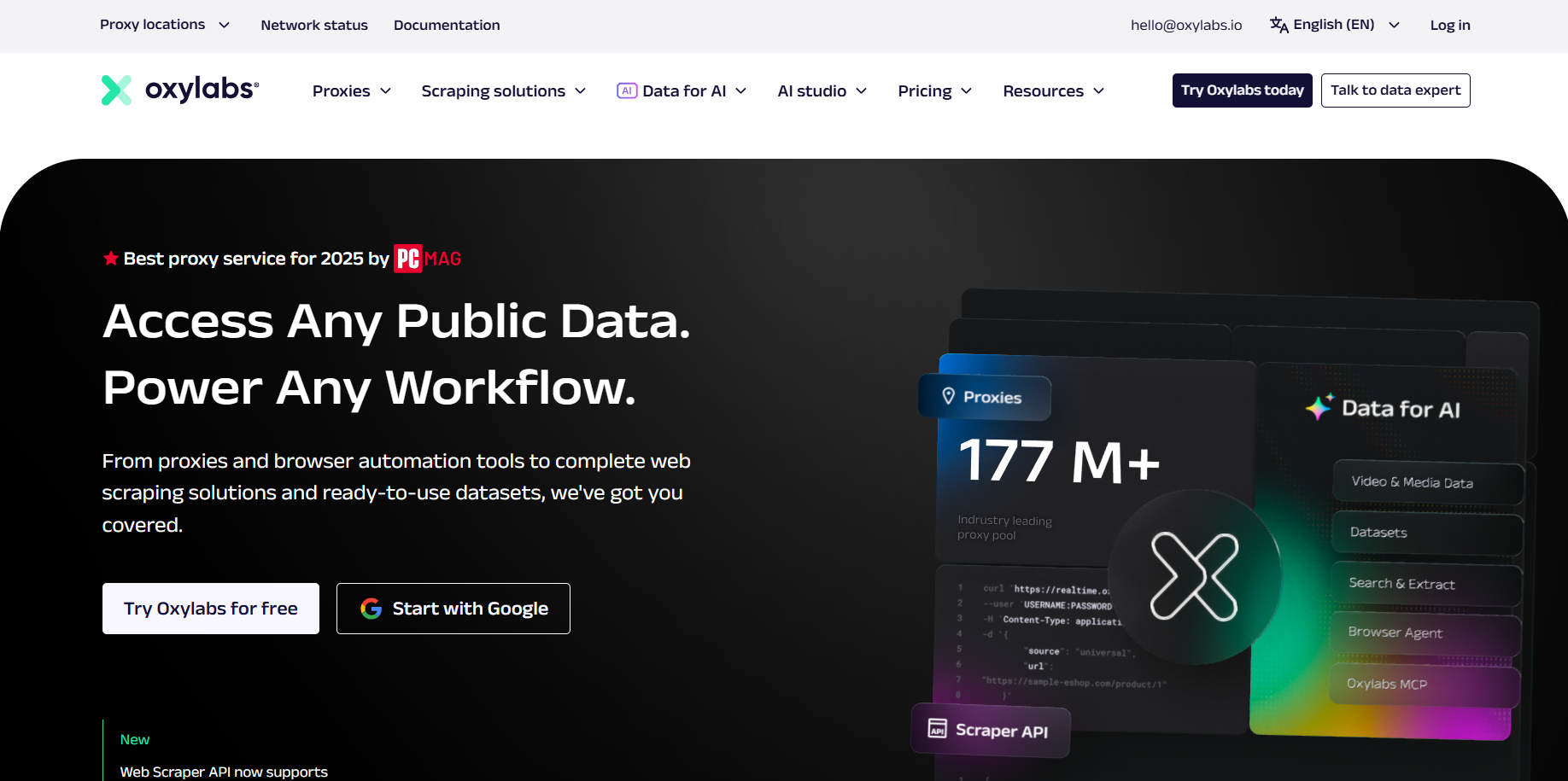
Oxylabs focuses on enterprise AI data collection workflows that require large proxy pools, scraping APIs, browser automation, and structured extraction tools within a single infrastructure stack. Its residential proxy network includes 175M+ residential IPs together with datacenter, mobile, and ISP proxies designed for recurring scraping, SERP collection, large-scale monitoring, and public web data extraction across complex or dynamic targets. This makes it a strong fit for teams that need both proxy access and managed scraping tools for production-level AI pipelines.
Key Features
Best Workflow Fit
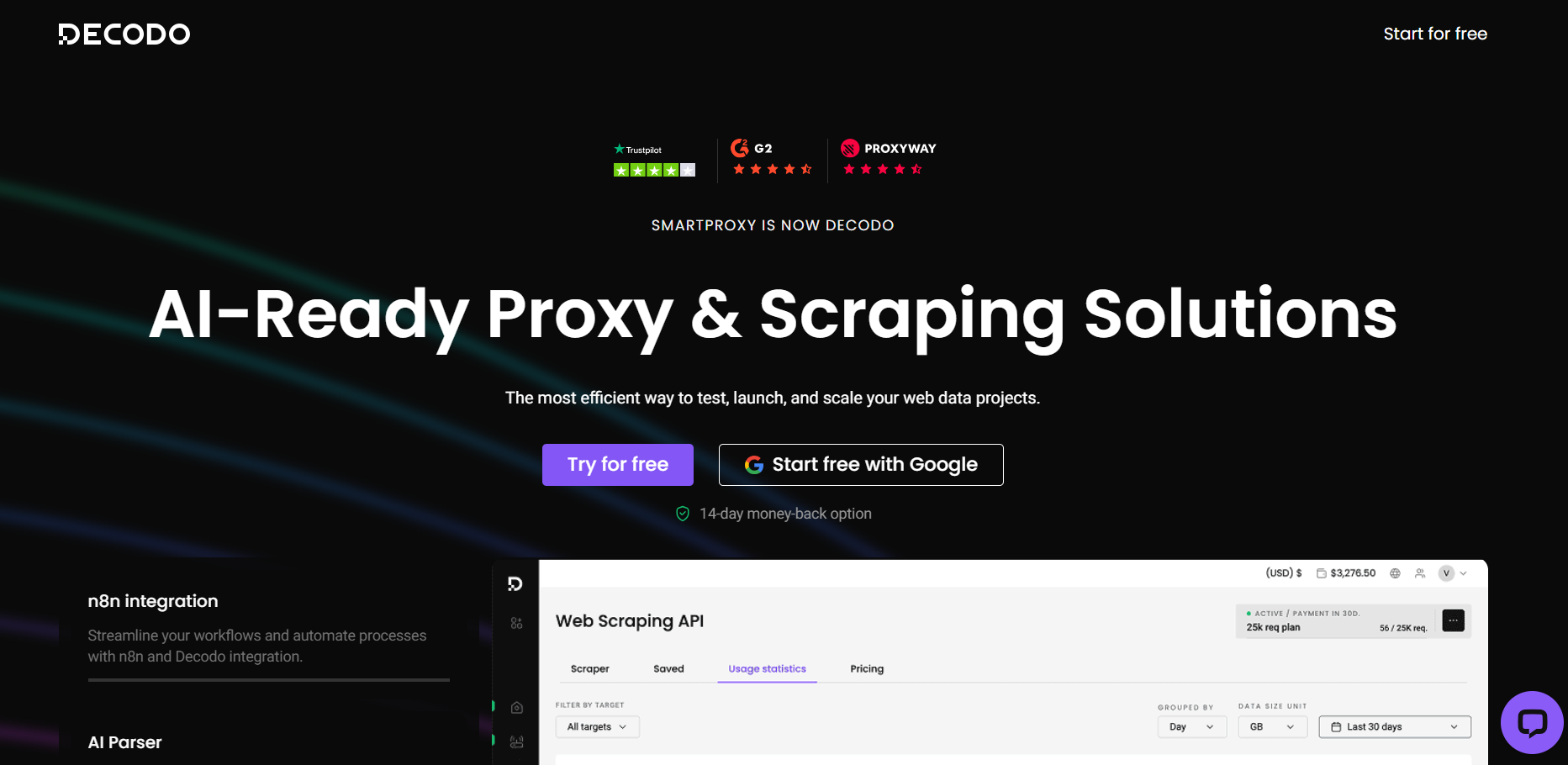
Decodo combines residential proxies with AI-ready scraping infrastructure and automation integrations for teams that need flexible data collection at scale. The provider supports residential, mobile, datacenter, and static residential proxies with flexible session controls and broad geo-targeting. Its setup fits AI scraping workflows that connect proxy routing with crawlers, scraping APIs, automation tools, and recurring data pipelines.
Key Features
Best Workflow Fit
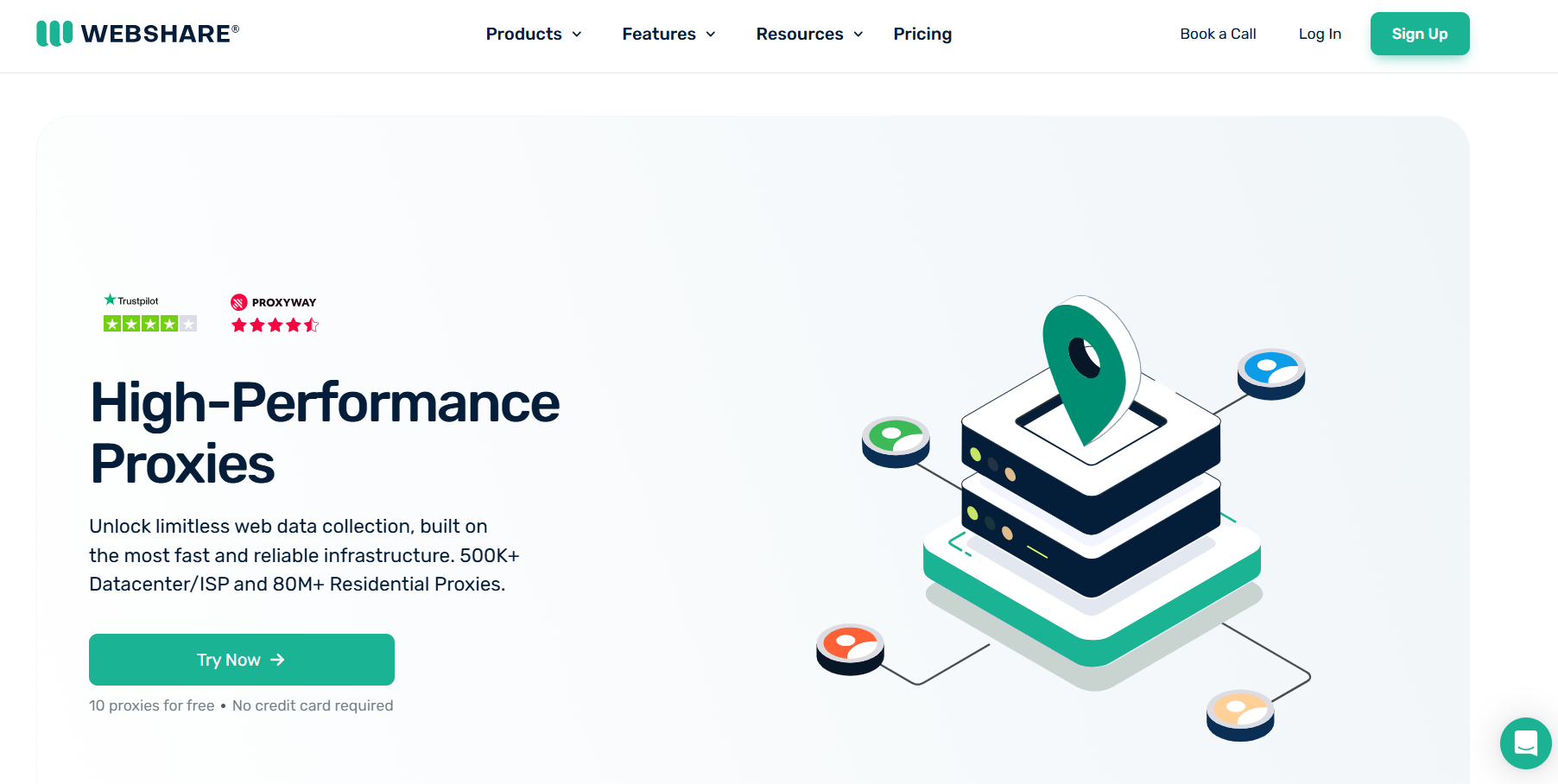
Webshare is a lightweight option for testing environments, smaller automation systems, and entry-level AI scraping workflows. The provider offers residential proxies, datacenter proxies, API access, and lower-cost deployment for teams that need quick setup without enterprise infrastructure. Its setup fits proof-of-concept scraping, development workflows, basic monitoring, and small AI data collection tasks where speed, simplicity, and budget control matter most.
Key Features
Best Workflow Fit
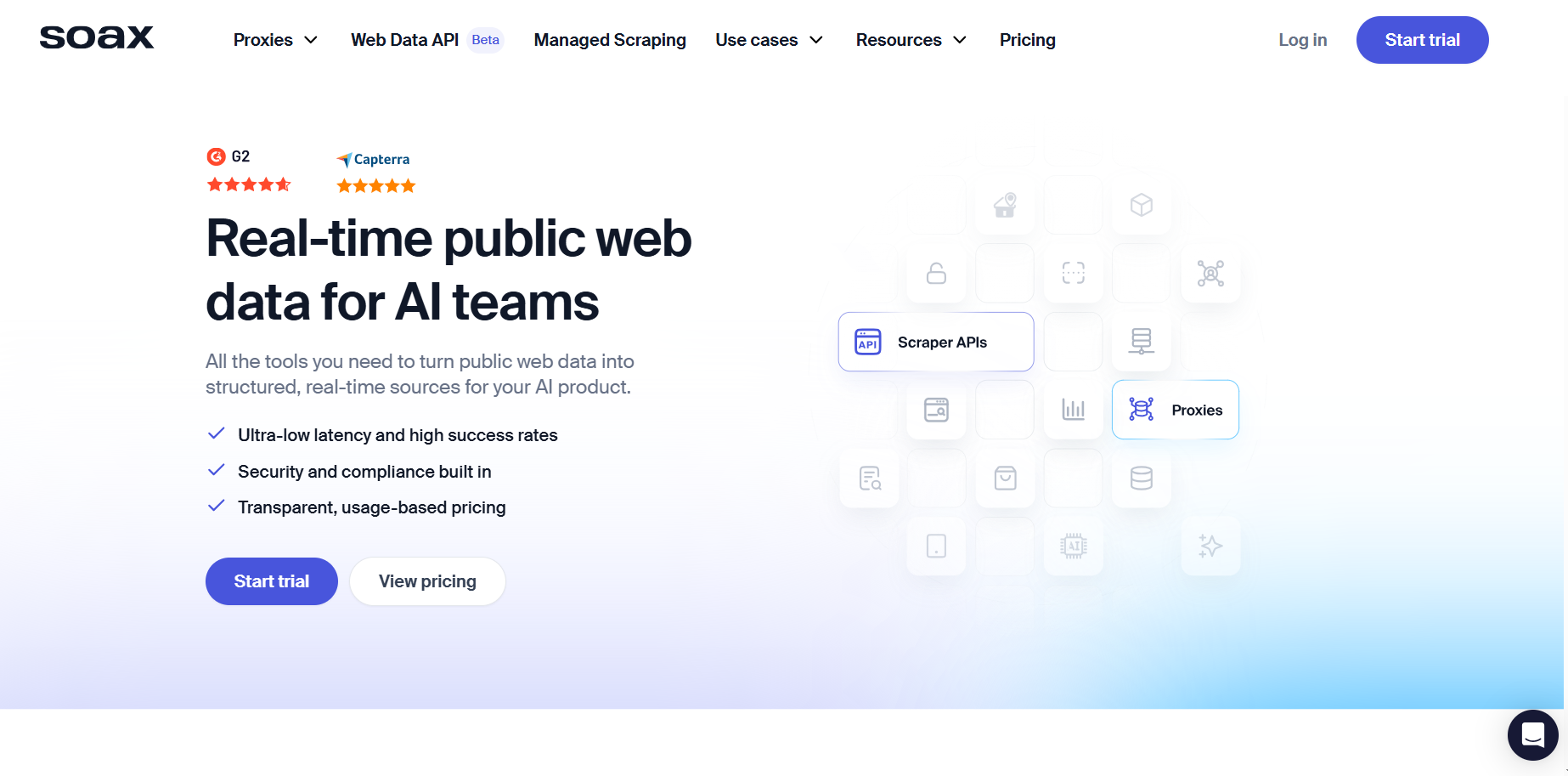
SOAX focuses heavily on geo-sensitive scraping workflows, localized monitoring, and location-based routing for AI data collection. The provider offers residential proxies and mobile proxies supported by a large ethically sourced IP network. Its setup fits workflows that need accurate regional signals across search results, ads, marketplaces, pricing data, and market-specific AI validation.
Key Features
Best Workflow Fit
IPRoyal is a practical, lower-cost provider for residential proxy workflows that need flexible traffic purchasing, stable sticky sessions, and simple setup. The provider supports SOCKS5 routing, residential proxies, and recurring AI scraping tasks with lighter deployment requirements than enterprise platforms. Its setup fits smaller AI teams that need SERP tracking, localized scraping, monitoring, and repeated data collection without complex infrastructure.
Key Features
Best Workflow Fit
The best AI scraping setup depends on workflow scale, session requirements, geo-targeting needs, and target sensitivity. A strong provider should match the actual scraping environment rather than only offering a large IP pool or low entry price.
1. Match Proxies to Targets: Different targets respond differently to residential, mobile, ISP, and datacenter traffic.
2 Review Rotation Settings: Rotation intervals should match scraping frequency and automation behavior.
3. Compare IP Quality: Cleaner IP pools reduce blocks and improve scraping stability.
4. Check Country Coverage: Localized collection depends on broad geo-targeting support.
5. Evaluate Scraping Stability: Long-running workflows need stable routing and predictable uptime.
6. Test Automation Support: APIs, dashboards, and session controls improve workflow management.
Many AI systems depend on recurring scraping pipelines that require distributed routing, stable automation, and location-aware access. Proxies become especially important when workflows collect public data repeatedly, compare locations, or need session continuity across multi-step tasks.
AI Training Datasets
LLM training systems often collect public web data across many sources, topics, formats, and locations. Proxies help distribute this collection across IPs and regions, reducing request concentration during broader dataset building. They also support more consistent access when collection runs across multiple websites and data categories.
SERP Scraping
Search result collection depends on localized routing, stable repeated access, and lower detection risk. Proxies help AI systems monitor visibility, validate outputs, track competitors, and compare regional search behavior. This is useful when search results change by country, city, device context, or user environment.
Product Data Collection
Product data workflows collect inventory, prices, seller details, reviews, and product availability across marketplaces. Proxies help these systems access regional marketplace data without overloading one route. They also support recurring checks when AI tools monitor price changes, stock movement, and catalog updates.
Market Intelligence
Market intelligence workflows compare pricing, visibility, trends, demand signals, and product availability across locations. Geo-targeted proxies help AI teams collect local signals that centralized access may miss. This helps build more accurate datasets for forecasting, competitive analysis, and regional market monitoring.
AI scraping systems should follow practical compliance standards when collecting public web data at scale. Proxies improve routing and access stability, but they do not remove the need to respect privacy rules, site policies, and responsible collection practices.
The best proxies for AI data collection depend on target sensitivity, request volume, session length, and geo-targeting needs. Strong proxy infrastructure should support stable routing, clean IP quality, controlled rotation, and automation-friendly setup.For AI scraping, the strongest setup usually combines residential or mobile IPs, sticky sessions, API support, and enough traffic flexibility for recurring data workflows. This makes proxy selection a workflow decision, not only a pricing or pool-size comparison.
Request a demo and get a free 7 days free trial with 25 users.